
India’s ambient scenting market is evolving quickly, but cultural habits, climate, regional preferences and expectations around fragrance mean that strategies developed elsewhere cannot simply be applied in the same way.
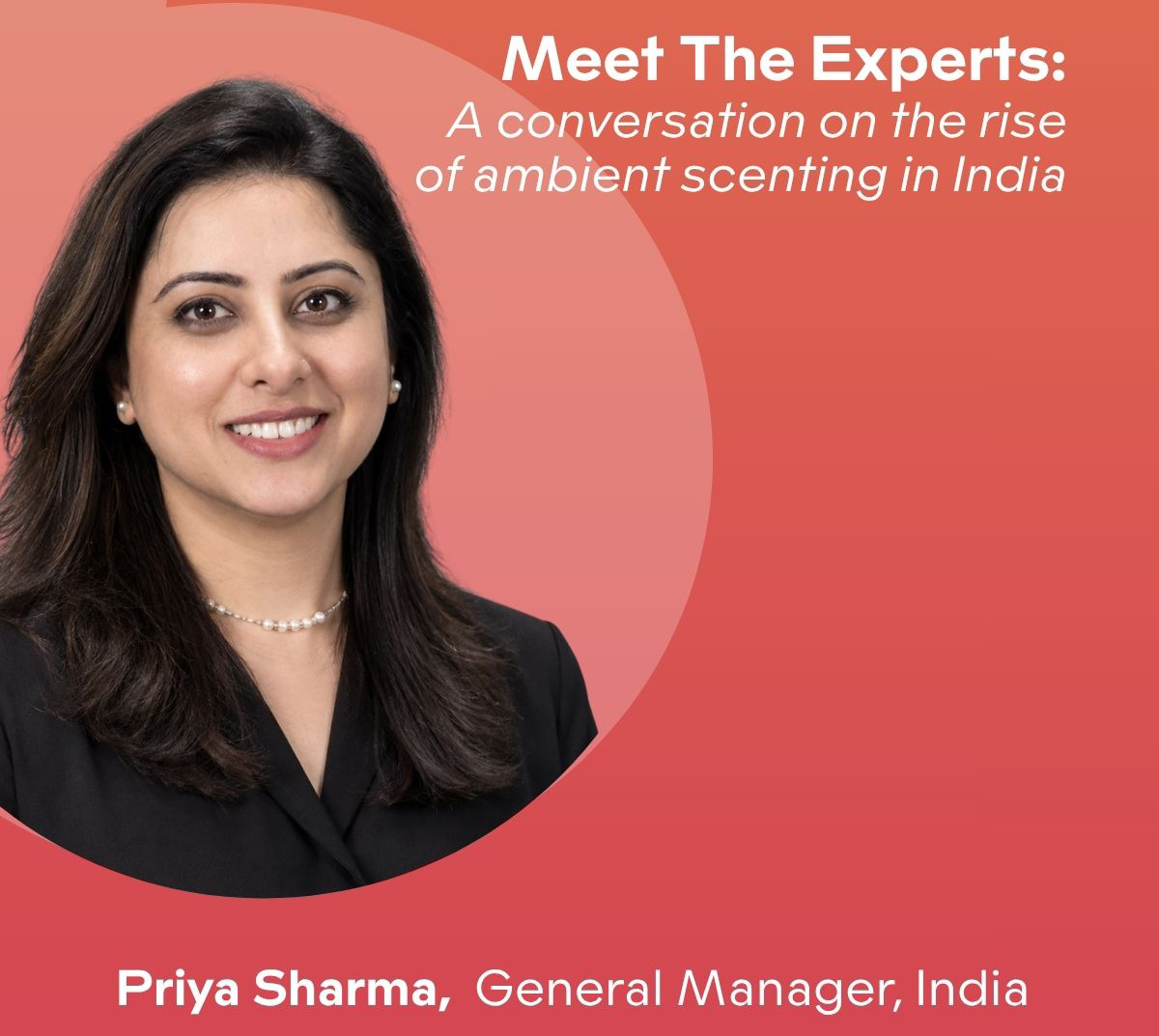
“India is one of the fastest growing ambient scenting markets globally right now,” says Priya Sharma, General Manager of Prolitec India.
Over the past three to five years, Priya has seen ambient scenting move from a facilities add-on to a much more deliberate part of brand and guest experience strategy.
At the same time, India comes with its own expectations.
“A global scent strategy simply doesn’t translate here directly,” she explains.
The reasons start with India’s long relationship with fragrance.
A Culture Already Fluent in Fragrance
Fragrance has been woven into everyday life in India for generations.
It appears in religious rituals, hospitality, and wellbeing traditions such as Ayurveda. That history gives customers a strong familiarity with fragrance long before they encounter it in a hotel lobby, store or workplace.
Priya notes this cultural background shapes expectations today. Indian clients often have an intuitive and sophisticated understanding of fragrance, with particular attention to authenticity, quality and the way a composition feels in a space.
That fluency also makes clients more demanding.
It also influences something very practical: how noticeable a fragrance is expected to be.
When Subtle Is Too Subtle
In many European and U.S. spaces, ambient scenting is often designed to stay in the background.
Priya frequently sees a different expectation in India.
She calls it “billboard scenting”: a fragrance with stronger projection and immediate recognition.
“It’s not about being overpowering,” she explains, “but about achieving stronger projection and immediate recognition.”
That distinction matters.
The right intensity depends on more than the size of a room, its airflow, or the diffusion equipment being used. Cultural expectations also shape what feels right.
A level that works well in a European hotel may simply feel too discreet in India.
For international brands, the same settings will not necessarily feel right everywhere.
Heat and Humidity Change the Equation
Then there is the climate.
A fragrance may work beautifully when first selected, but in India it also has to perform through heat and humidity.
Priya says longevity matters greatly. The composition needs to hold up under local conditions, which makes performance part of the selection process from the start.
The same climate can also intensify unwanted odor challenges.
And climate is only one variable. Across India, preferences themselves can change from one region to another.
There Is No Single “Indian” Preference
India also resists easy generalizations.
According to Priya, preferences vary meaningfully by region, which makes a one-size-fits-all approach difficult.
There is no single fragrance profile or intensity level that represents the country as a whole. Staying close to client feedback is therefore an important part of developing programs across different areas.
Global brands may want guests or customers to recognize the same brand identity across many locations. At the same time, that experience still needs to work in the local environment.
And all of this is happening as the market itself is changing.
From Incense and Sprays to Experience Design
For years, commercial scenting in India was largely associated with incense, traditional air freshening sprays used to cover unwanted odors.
Priya says that picture is changing fast.
Hospitality and retail leaders are increasingly looking at fragrance as part of the overall experience, alongside elements such as lighting and music.
Hospitality remains the strongest sector. Luxury retail is also showing meaningful growth, with a fragrance used to reinforce brand identity across customer touchpoints. Commercial real estate and corporate workplaces are paying more attention to the environment they create for visitors and employees as well.
Priya sees several forces behind this shift: greater awareness among hospitality and retail leaders, more investment in experience design and increasing exposure to international standards.
Technology is moving forward at the same time.
Businesses are moving toward modern diffusion systems that offer greater control and consistency than the basic products that traditionally dominated the market.
A Country This Large Needs Local Support
India’s scale creates another challenge.
A program can be designed centrally, but every installation still happens in a real hotel, store, office or other commercial space. Equipment needs to be installed, systems need servicing and clients need support on the ground.
In a country this large, service has to be local.
Prolitec works with a network of Channel Service Partners, or CSPs, that provide sales, installation and service capabilities in the market. The company also sees opportunities to develop that network further as it expands into new regions.
Prolitec had already been active in the country for several years before formally incorporating Prolitec India in September 2025.
Priya says local incorporation and manufacturing have helped make Prolitec’s solutions more accessible to a wider range of businesses.
The strategy may be international, but the experience is delivered to one location at a time.
Getting India Right
India is already showing that successful ambient scenting depends on understanding the market as closely as the fragrance itself.
For brands expanding across the country, that means paying attention to how people expect a space to smell, how local conditions affect performance, and how those expectations change from one region to another.
Planning a scenting program in India or expanding an existing one? Talk to Prolitec about how to adapt your approach to the market.
Lucie Goutagny
Content and Community Coordinator at Prolitec, a leading commercial ambient scenting company specializing in professional fragrance diffusion and scent experience solutions.