
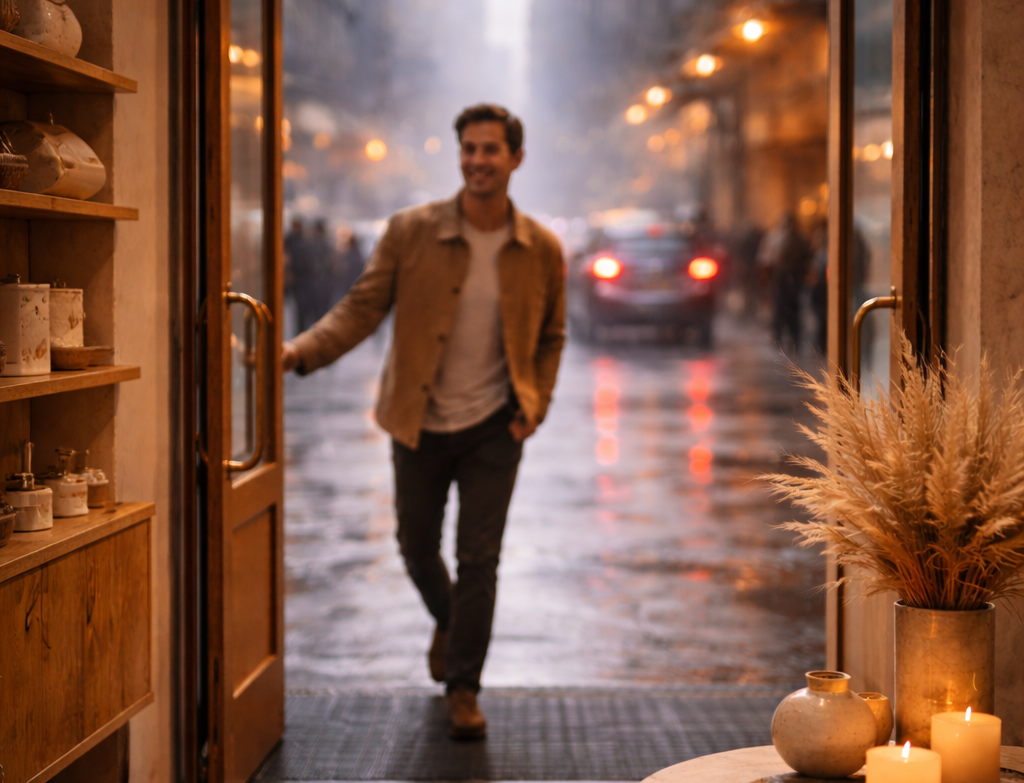
After years of working alongside retail brands across regions and formats, one pattern has proven impossible to ignore. Most retail spaces focus on what they sell. Customers, however, decide whether to return based on how the space makes them feel.
Between inflation pressure and constant digital stimulation, people are far more selective about where they choose to spend time.
From Atmosphere to Intentional Experience Design
For a long time, sensory elements in retail were treated as mere background decoration. Scent was often added as a finishing touch — something “nice to have.” That approach no longer holds.
Today, there is a clear shift toward intentional experience design, where every sensory input has a purpose. Lighting isn’t just about visibility; it sets the mood. Sound influences pace and energy. Materials communicate quality and trust. And scent is increasingly used functionally rather than decoratively.
The Rise of Functional Scenting
In the fragrance industry, we often refer to this evolution as functional scenting.
Functional scenting involves designing fragrance environments that support specific emotional or cognitive states at key moments of the customer journey. In practice, this means using scent to:
- reduce stress and sensory overload
- support focus and mental clarity
- reinforce comfort and confidence
- create a calm, welcoming first impression
At Prolitec, this shift has fundamentally changed how we think about fragrance design. Increasingly, our work focuses on purpose-driven scent environments, including collections developed specifically to support clarity, balance, and focus in demanding spaces — such as our new Focus Collection.
Where Scent Has the Greatest Impact
One important lesson we’ve learned: functional scenting works best when it’s applied strategically, not uniformly. Some moments in the retail journey carry more emotional weight than others.
Store entrances are emotional transition zones. A well-designed scent can help customers disconnect from the outside world and become more receptive.
Fitting rooms are high-stakes moments. Confidence, comfort, and self-perception directly influence purchase decisions. Subtle scent profiles can help reduce self-consciousness and emotional tension.
Waiting areas are friction points. Waiting naturally increases irritation, but sensory cues — including scent — can lower perceived waiting time and ease frustration.
Premium zones are about perceived value. Multi-sensory coherence reinforces craftsmanship, attention to detail, and brand credibility.
Retail Must Feel Good First
The stores that succeed in the coming years won’t be louder or more spectacular. They will be emotionally intelligent, designed to help people feel calmer, more confident, and more comfortable being present.
Scent, when used intentionally and functionally, plays a central role in that shift. It doesn’t replace strong products, service, or pricing. But it amplifies them — by shaping how the experience is felt, not just how it is seen. And today, how a space feels is often what determines whether people come back at all.
By Olivier Delenclos, Vice President, Global Business Development