Focus is failing — and it has nothing to do with your people.
We have built environments full of noise, interruptions, and competing stimuli — then asked for deep work. Something doesn’t add up.
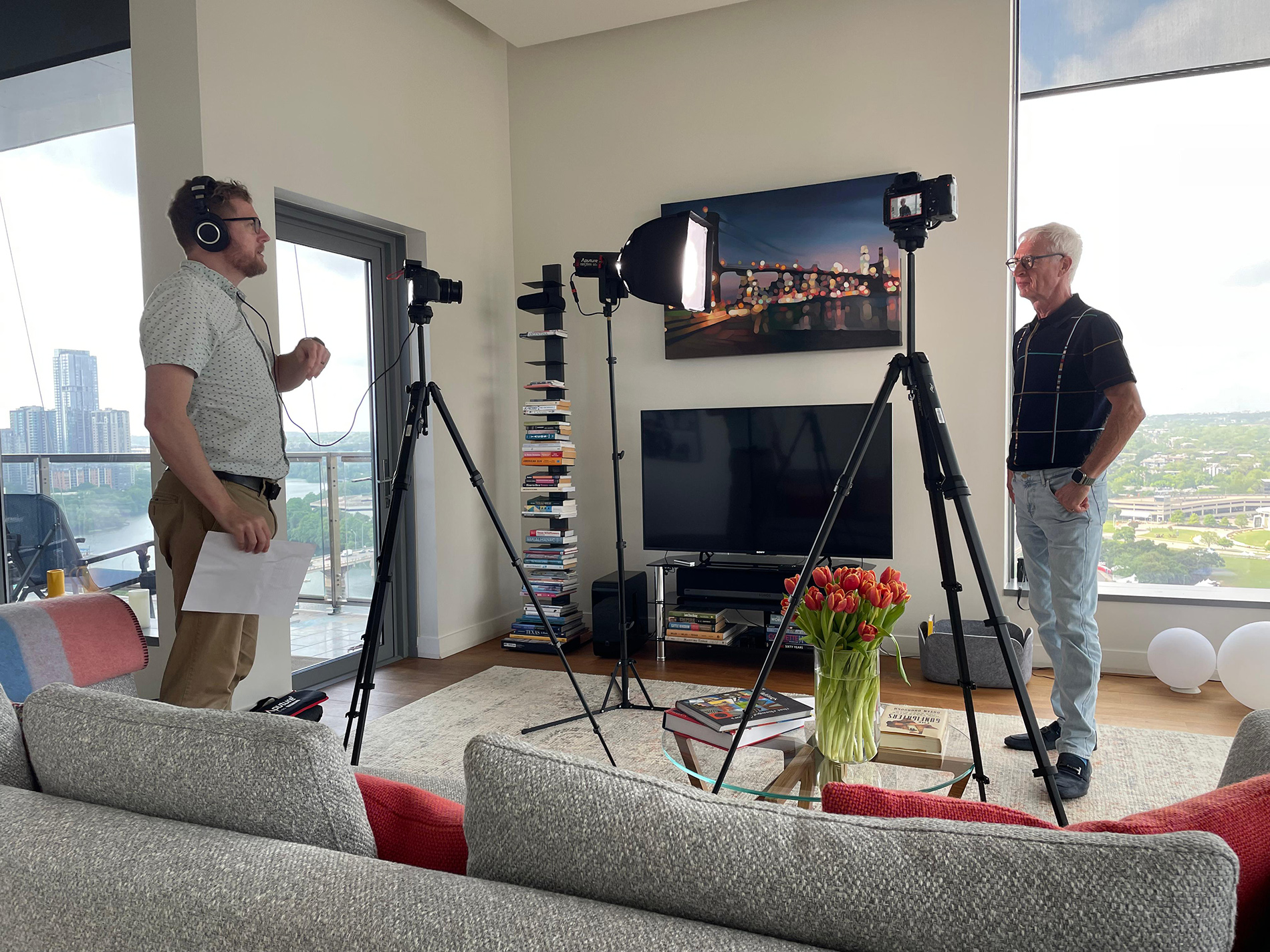
For Philip Vanhoutte, co-founder of Smarter Working and a leading voice in workplace design, this is one of the defining challenges of modern work: focus is no longer a personal skill — it’s an environmental outcome.
Over the past decade, multitasking, and what he calls “weapons of mass distraction” (constant notifications, open-plan noise, endless meetings, digital overload) have become embedded in how we work.
We have optimized lighting. We have improved acoustics. Still, we’re not designing for how people perform. Performance isn’t just visual or auditory — it’s deeply sensory.
“Scent is one of the fastest ways to influence how people feel and perform,” he explains.
And yet, it remains largely overlooked.
Discover why scent is emerging as a key dimension of workplace design — and how the Prolitec Focus Collection, backed by FocusMax™ technology, is helping organizations design environments that actively support focus, energy, and cognitive performance.
A fragrance collection built around a real workplace need
If focus is an environmental outcome, the question becomes how to design for it.
The Prolitec Focus Collection was developed with that premise in mind — a fragrance system designed to support focus, energy, and cognitive performance in the workplace. What impressed Philip Vanhoutte was not just the fragrances themselves, but the research behind them:
Built on the analysis of more than 40,000 fragrances and more than one million consumer responses, FocusMax™ uses AI to identify patterns between scent compositions and emotional responses. From there, it generates design rules which perfumers use to develop fragrances that create specific emotional states, such as energy or calm.
“When I read about what FocusMax™ is capable of, I was blown away.”
The idea of scenting itself is not new — but the shift toward designing environments that are intentional, evidence-informed, and directly connected to how people think and perform is becoming a strategic priority.
Biophilic design: why scent is a critical, yet overlooked layer
For Philip, biophilic design is often understood through what we can see — plants, natural materials, and daylight. But its principles extend far beyond the visual.
“We need nature to function,” he explains. “Not occasionally, but continuously — including in the environment we work in.”
This is where scent becomes particularly relevant.
Unlike visual or auditory stimuli, scent operates through the olfactory system, with a direct link to the limbic brain — the area responsible for emotion, memory, and behavioral responses.
As a result, its effects are often immediate.
And yet, it remains underrepresented in how workplaces are designed.
Scent, in that context, stands out as one of the most accessible ways to introduce a continuous, nature-based signal into the environment — and to influence how we perform throughout the day.
Smarter working requires a multisensory approach
Philip’s philosophy is grounded in a simple observation: performance is not driven by effort alone — it is shaped by the environment.
In his own space — from his Work home in Bruges to the Savanna WorkWell Studio — this becomes immediately visible.
Visitors don’t just notice the space. They react to it.
“You can see it instantly,” he says. “Shoulders drop. People relax.”
That reaction is not anecdotal.
It is the result of environments designed as systems — not isolated features.
Air, sound, light, and scent work together to regulate how people feel, focus, and perform.
And it points to a broader shift: the future of work isn’t just about managing tasks.
It’s about designing the conditions that make performance possible.
One workplace can’t support every kind of work
Most workplaces are designed as if everything happens in the same way — in the same space, under the same conditions.
For Philip, work is better understood as a set of rituals:
- energizing
- authoring
- sharing
- interacting
Each one requires a different environment.
“If you’re not energized, you’re not going to go very far.”
That’s where scent becomes especially powerful — not as a fixed background, but as something that adapts to the moment.
“My experience is that people need to switch between fragrances to match the challenge or the opportunity at hand.”
Rather than utilizing a single signature scent, this enables a more dynamic approach to workplace design — aligned with how people work.
This is the advantage of the Focus Collection’s three distinct fragrances:
- Crystal Waters — for recovery and mental resets between meetings or tasks
- Golden Woods — for deep work, decision-making, and focused execution
- Snow Flower — for transitions: arriving, starting the day, or shifting pace
What portability changes in hybrid work
Philip also highlighted another important advantage: portability.
“In the world of hybrid, there are so many places that you can work. You can work at home, in the office, but a lot of places in between.”
For organizations, this creates a new challenge: performance can no longer rely on a single, fixed environment.
That is why he sees the Aera® lineup (our home fragrance collection) — including Aera Mini™ and Aera Go™ — as relevant.
This is where portability becomes critical.
A scent is no longer tied to a desk, a room, or a building.
It becomes part of how people work — across locations, throughout the day.
A message to business leaders
Philip’s advice to organizations is direct:
“Be open-minded on the topic of fragrances.”
He believes too many leaders still underestimate what scent can do in professional settings — not only for comfort, but for productivity, creativity, and well-being.
“A lot has been achieved over the last few years that demonstrate enormous potential for productivity increase, stress reduction, increased creativity, higher happiness for your associates.”
And his call to action is simple:
“Don’t wait.”
“You will realize that this does not request a large ROI analysis. A little bit of common sense will get you going with the benefits of fragrances from the Prolitec Focus Collection.”
The future of smarter working
Focus isn’t failing for lack of effort.
It’s failing because environments were never designed for it.
For years, organizations have tried to improve performance by optimizing people — through tools, policies, and expectations.
But the real leverage sits elsewhere.
In the environment.
In the conditions that shape how people think, feel, and perform — often before they even begin a task.
Scent is not the only factor.
But it may be one of the most overlooked.
And for organizations serious about performance, that raises a simple question:
What would change if your workplace was designed to support how people perform — not just where they work?
Lucie, Content and Community Coordinator